
Welcome to the Mathematical World!
Jagadish Chandra Bose
Pioneer of Wireless Communication and Plant Physiology
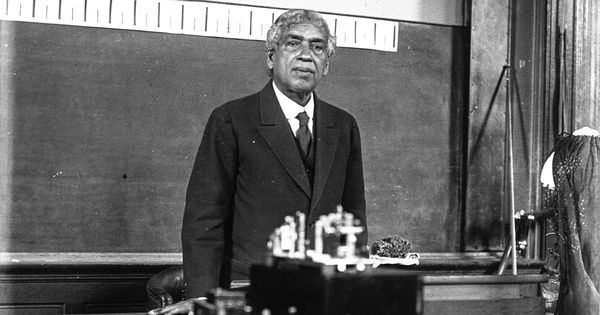
Jagadish Chandra Bose (1858–1937) was an Indian polymath, physicist, biologist, and inventor. Born in Bengal, British India, he made pioneering contributions to radio and microwave optics, as well as to the study of plant physiology. Bose is often regarded as one of the earliest researchers to explore the electrical nature of life and the communication of plants.
Contributions to Physics and Wireless Communication
Bose conducted groundbreaking experiments in the field of radio and microwave optics. In the late 19th century, he demonstrated the use of millimeter-length electromagnetic waves and conducted experiments on their reflection, refraction, and polarization, predating Marconi’s practical radio work. He also invented highly sensitive receivers and detectors for microwaves, showing that electromagnetic waves could travel long distances and be manipulated for communication purposes.
Contributions to Plant Physiology
Bose extended his research to biology, pioneering experiments that demonstrated electrical responses in plants. He showed that plants respond to various stimuli, including light, temperature, and mechanical touch, and that these responses could be measured electrically:
\[ V = IR \]where \( V \) is the electrical potential across plant tissues, \( I \) is the induced current, and \( R \) is the resistance. Bose also invented the crescograph, an instrument capable of measuring plant growth at micrometer scales, revealing that plants exhibited shock responses similar to nerves in animals.
Integration of Science and Philosophy
Bose’s work bridged physics and biology, demonstrating that electrical and physical phenomena could explain life processes. His experiments provided early evidence for the continuity between animal and plant life in terms of responsiveness and sensitivity, challenging traditional boundaries in science.
Legacy
Jagadish Chandra Bose’s innovative research laid the foundation for wireless communication technology, the study of bioelectromagnetics, and plant neurobiology. He was among the first to show that plants are not inert but respond to their environment in measurable ways. His contributions influenced generations of scientists in India and abroad, cementing his place as a pioneer in both physics and biology.

All rights reserved by the Mathematical Unity
Contact: +8801400044645
Email: mathematicalhorse1453@gmail.com
Our Discord Server: Mathematical Unity [Ulus Riyadiyat]